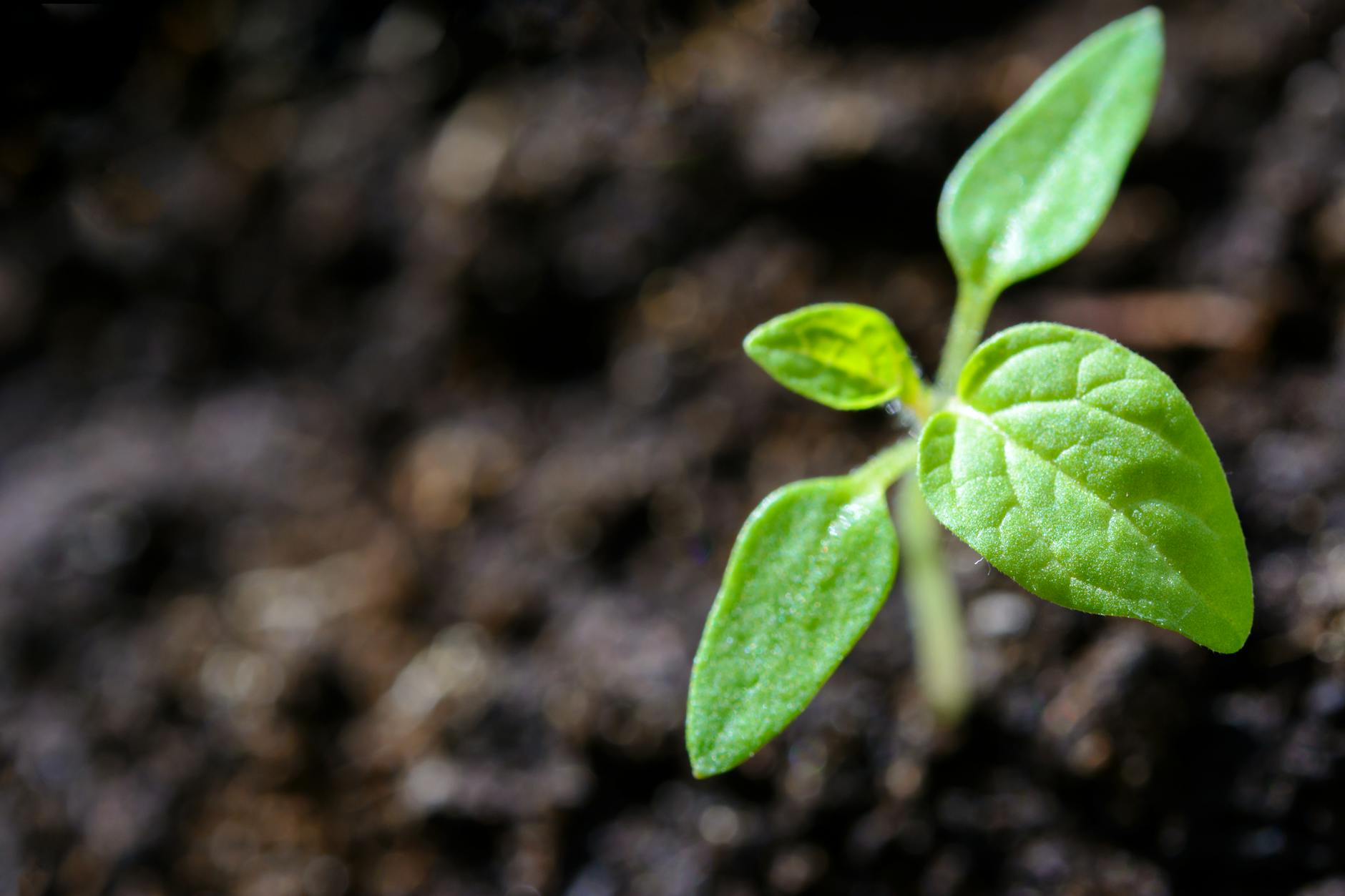
You know that feeling, don't you? The one where you've nurtured your little veggie seedlings from tiny seeds, full of hope and anticipation, only to walk into your greenhouse or check your raised beds and spot something... off. For me, here in the UK Midlands, it’s often a sudden chill or a relentless downpour that causes issues, but one problem that used to really stump me in my early gardening days was seeing those vibrant green leaves of my young plants take on a rather alarming shade of purple.
I remember my first year, five years ago now, when I'd just left my IT job and gone all-in on gardening. I had a tray of promising 'Costata Romanesco' courgette seedlings, destined for a sunny spot in my 800 sq ft backyard. They were growing beautifully, until one morning after a particularly cold snap we often get here in Britain, their leaves started to develop a distinct purple tinge. My heart sank. Was it a disease? Had I overwatered? Under-watered? I scoured forums, consulted my ever-growing stack of gardening books, and felt utterly lost. It was a proper head-scratcher, and frankly, a bit disheartening.
What I've learned since then, through plenty of trial and error (and a fair few purple-leaved disasters!), is that while purple leaves can be a sign of a few different things, more often than not, especially in young plants, it points to a phosphorus deficiency. It's a common issue, particularly in our often-cool and wet UK climate, and it's something I've become quite adept at spotting and fixing in my own garden. My goal today is to share everything I've learned, so you don't have to go through the same frustrating detective work I did. We'll dive into why this happens, what to look for, and how to get those little plants back to their glorious green selves, thriving in your UK garden.
Spotting the Early Signs: Why Your Young Veggies Might Be Turning Purple
Imagine you've just pricked out your 'Sungold' tomato seedlings into larger pots, or perhaps you've sown a direct bed of 'Kelvedon Wonder' peas. They’re emerging, looking strong, and then you notice it. Not across the whole plant initially, but often on the underside of the older, lower leaves, or along the leaf margins. A subtle, almost bruise-like purple hue begins to appear. It can range from a faint lavender blush to a deep, vibrant plum colour, sometimes even turning the entire leaf purplish-black.
In my own garden, I first really noticed this on my sweetcorn. I was growing 'Swift' sweetcorn, a reliable variety for the UK, directly in a raised bed after a cold, wet spring. The plants were growing slowly, and the lower leaves had this really obvious purple streaking. My first thought was, "Oh no, what now?" I'd been so careful with my compost mix, but our unpredictable British weather had thrown a curveball. The soil temperature just wasn't quite warm enough for the plants to access the nutrients they needed, even though they were present. It’s a classic example of how environmental factors, especially here in the UK, can mimic a true deficiency.
The key is often the young plants. Seedlings, newly transplanted starts, or plants that have just had a growth spurt are particularly vulnerable. They're establishing their root systems and putting on rapid growth, which demands a lot of energy and specific nutrients. When those demands aren't met, especially for something as critical as phosphorus, they start to show stress in visible ways.
The Vital Role of Phosphorus in Young Plant Development
Think of phosphorus (P) as the plant's energy currency. It's absolutely crucial for almost every metabolic process within the plant, especially when they're young and growing rapidly. For us gardeners, it’s essential for:
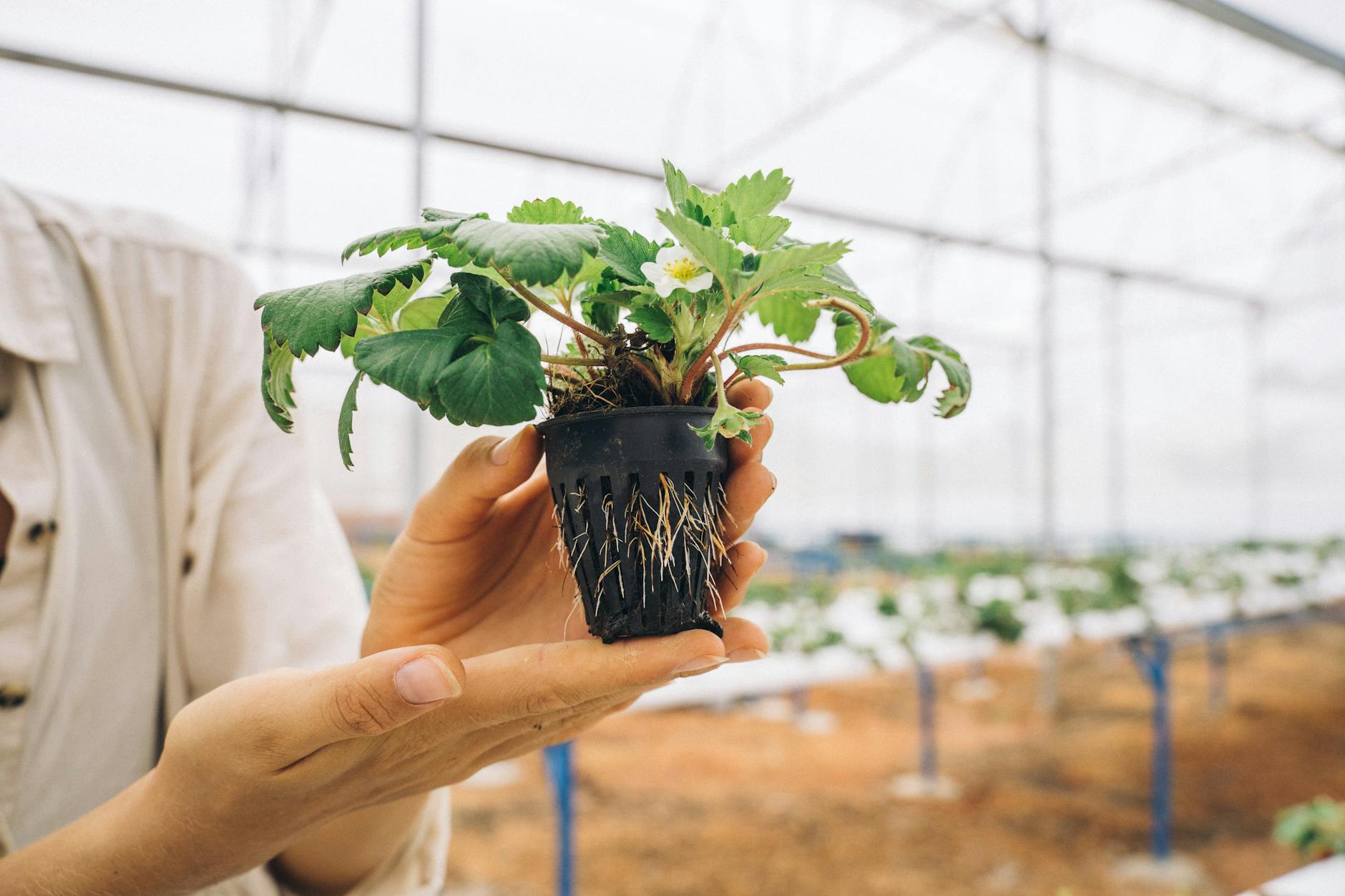
- Root Development: Phosphorus is critical for strong, healthy root growth. Without a robust root system, your young plants can't efficiently absorb water and other essential nutrients from the soil, leading to a cascade of problems. I've found that strong roots are the bedrock of resilience, especially when dealing with our variable British summers.
- Energy Transfer: It plays a key role in photosynthesis, converting sunlight into usable energy. When a plant can't access enough phosphorus, its ability to photosynthesise effectively is hampered, directly impacting growth.
- Flowering and Fruiting: While we're talking about young plants here, it's worth noting that phosphorus is also vital for flower formation and fruit development later on. A strong start sets the stage for a good harvest.
- Genetic Information: Phosphorus is a component of DNA and RNA, the building blocks of life, so it's fundamental for cell division and overall plant growth.
When I’m potting up my heirloom tomato seedlings – I’m a huge fan of 'Black Krim' and 'Brandywine' in my greenhouse – I always ensure my potting mix has a good, balanced slow-release fertiliser that includes phosphorus. I’ve learned the hard way that skimping on this in the early stages can lead to stunted growth and, yes, those tell-tale purple leaves. It's about giving them the best possible start to tackle whatever the UK weather throws at them!
Pinpointing Phosphorus Deficiency: Key Symptoms to Look For
So, you’ve spotted some purple. Now what? While the purple colour is the most obvious sign, there are usually other clues that, when combined, strongly suggest phosphorus deficiency. I’ve seen this time and time again in my raised beds and greenhouse, from my early brassicas to my late-season French beans.
Here's a detailed look at the symptoms I’ve learned to spot in my UK garden:
- Purple Colouration: As we've discussed, this is the hallmark. It typically appears on older, lower leaves first because phosphorus is a mobile nutrient, meaning the plant can move it from older leaves to newer, actively growing parts. The purple can be uniform, blotchy, or concentrated along leaf veins and edges.
- Stunted Growth: This is almost always present. Your plants will simply not be growing as vigorously as they should be. They'll look small, weak, and generally lack the lushness of healthy plants. I’ve had 'Florence Fennel' that just sat there, barely growing past a few inches, despite good watering and light, simply because the soil was too cold for phosphorus uptake.
- Dark Green or Blue-Green Leaves: Paradoxically, alongside the purple, the rest of the leaf might appear an unusually dark green, sometimes with a bluish tint. This is often more noticeable on the upper, newer leaves.
- Delayed Maturity: If the deficiency persists, your plants will take much longer to reach maturity, flower, and produce fruit. This is a big issue in the UK, where our growing season can feel short enough already!
- Weak Stems: Stems might be thinner and weaker than normal, leading to plants that struggle to stand upright.
- Reduced Tillering (e.g., in grasses/cereals): For plants like sweetcorn, you might notice fewer side shoots or 'tillers' developing.
To help you get a clearer picture, I've put together a comparison table of what healthy young plants look like versus those suffering from phosphorus deficiency, based on my observations in my Midlands garden:
| Symptom | Healthy Young Plant | Phosphorus Deficient Young Plant | My UK Garden Experience |
|---|---|---|---|
| Leaf Colour | Vibrant, uniform green | Dark green, often with purple/blue tints, especially on older leaves/undersides. | My 'Redbor' Kale seedlings often show this purple if planted out too early in spring. |
| Growth Rate | Rapid, consistent growth | Stunted, slow, or stalled growth. Plants appear small for their age. | My 'Harbinger' Cabbage seedlings looked tiny and never really got going until I warmed the soil. |
| Leaf Appearance | Smooth, pliable, lush | Stiff, sometimes brittle leaves. Purple can be blotchy or vein-specific. | The lower leaves of my 'Cherokee Purple' tomatoes sometimes get this if the greenhouse temperature drops. |
| Stem Strength | Thick, sturdy, upright | Thin, weak, sometimes purplish stems. | Weak stems meant my young 'Provider' Bush Beans struggled to stand up after a windy week. |
| Root Development | Extensive, white, healthy root system | Sparse, poorly developed, sometimes brownish roots. | I once pulled up a purple-tinged lettuce and saw its roots were tiny and underdeveloped. |
| Overall Vigor | Robust, resilient, full of life | Lacks vigour, looks sickly, susceptible to other stresses. | These plants are generally just 'unhappy' and don't bounce back from small stresses. |

Not Just Phosphorus: Other Culprits Behind Purple Leaves in Your Garden
Now, here's where it gets a bit tricky, and where my IT background probably helps with the diagnostic process! While phosphorus deficiency is a prime suspect, especially for young plants, it’s not the only reason your veggie leaves might be turning purple. This is a crucial distinction, and one I’ve made mistakes with in the past. I’ve rushed to add phosphorus, only to find the problem persisted because I’d misdiagnosed it.
Here in the UK, environmental factors often play a huge role. Our famously unpredictable weather, especially those cold snaps in spring or sudden dips in temperature after a warm spell, can throw everything off. Understanding these other potential causes is key to getting the right fix.
Here are the main alternative culprits I've encountered in my UK garden:
- Cold Temperatures: This is, in my experience, the most common non-phosphorus deficiency cause of purple leaves in the UK. When soil temperatures drop below 10-15°C (50-60°F), plants struggle to absorb phosphorus, even if it's present in the soil. It’s not a true deficiency of phosphorus in the soil, but rather an inability of the plant to access it. I’ve seen this countless times with my sweetcorn, courgettes, and even some brassicas if I've been too eager to plant them out in April or early May. Our British springs can be notoriously fickle!
- Soil pH Imbalance: Phosphorus availability is highly dependent on soil pH. In very acidic (low pH) or very alkaline (high pH) soils, phosphorus can become locked up and unavailable to plants. Most vegetables prefer a slightly acidic to neutral pH (6.0-7.0). I’ve found that regular soil testing, especially in my raised beds where I add a lot of compost, is vital.
- Compacted Soil/Poor Drainage: Roots need oxygen to function properly and absorb nutrients. If your soil is compacted or waterlogged, roots can't breathe, and their ability to take up phosphorus (and other nutrients) is impaired. This can be a real issue in heavier clay soils, common in parts of the UK, especially after a prolonged period of rain.
- Root Damage: Any damage to the root system – from transplant shock, pests (like wireworms, which I’ve battled in my potato patch), or fungal diseases – can hinder nutrient uptake, including phosphorus. I once accidentally sliced a root ball of a 'Rhubarb Chard' seedling when transplanting and it showed purple leaves for a week!
- Nitrogen Toxicity (Less Common): While rare, excessive nitrogen can sometimes inhibit phosphorus uptake, leading to similar symptoms. This is usually only an issue if you’ve gone very heavy on high-nitrogen fertilisers.
To help differentiate these, here's another table based on my practical experience:
| Symptom | Phosphorus Deficiency (Soil/Uptake) | Cold Temperatures (Environmental) | Soil pH Imbalance (Availability) | Root Damage (Physical) |
|---|---|---|---|---|
| Purple Leaves | Yes, especially older leaves, uniform or veins | Yes, often all over the plant, particularly new growth | Yes, can be similar to deficiency | Yes, usually affects the specific damaged plant |
| Growth Rate | Stunted, very slow | Stunted, slow, but may recover with warmth | Stunted, slow, potentially other nutrient issues too | Stunted, plant may wilt, then show purple |
| Temperature Context | Any temperature, soil may be deficient/locked up | Occurs after cold snaps, especially below 10-15°C | Consistent issue, not linked to temperature shifts | Can happen anytime, often after transplanting/pests |
| Other Symptoms | Dark green leaves, weak stems | May also show general stress, drooping, slow recovery | Other nutrient deficiencies (e.g., iron in high pH) | Wilting, sudden decline, uneven growth, plant death |
| Solution Hint | Amend soil with phosphorus | Warm soil, protect plants, wait for warmer weather | Test soil pH, amend to correct | Replant carefully, protect from pests, avoid overwatering |
| My UK Garden Note | Common in poor soil, or where P is locked up | Very common in UK spring, especially with early planting. | Less frequent if beds are regularly amended. | Often after a clumsy transplant or a wireworm attack in my potato bed. |
Understanding these nuances is crucial for any UK gardener. It’s about being a detective in your own garden, observing not just the plant, but the context – the recent weather, your soil history, and how you’ve handled your seedlings. Only then can you truly pinpoint the problem and give your young veggies exactly what they need to thrive.
5. Diagnosing the Issue: Simple Soil Testing for UK Home Gardeners
Right, so you've done your visual inspection, considered the temperature, and you're still leaning towards phosphorus deficiency. What's the next step? For me, it's always about getting down to brass tacks with a good old soil test. Visual cues are brilliant, but they can sometimes mislead, and that's where a simple soil test kit really shines in my UK garden.
I've been using basic home soil testing kits for about four years now, ever since I had a particularly stubborn patch of purple-leaved kale in one of my raised beds. I picked up a simple NPK (Nitrogen, Phosphorus, Potassium) and pH test kit from my local garden centre – the kind with the little colour-coded vials. They're pretty inexpensive, usually under a tenner, and give you a decent snapshot of what's going on beneath the surface. For me here in the Midlands, understanding my soil is step one for everything.
How I Do It: My DIY Soil Testing Routine
First off, don't just grab a scoop from the top. You want a representative sample. In my raised beds, I'll take samples from about 10-15cm deep in several spots across the bed, mixing them all together in a clean bucket. If I'm testing an open patch of ground, I'll go a bit deeper, maybe 20cm, and take samples from different areas to get a good average. I always make sure the soil isn't soaking wet or bone dry when I take the samples – slightly moist is perfect.
Follow the kit instructions carefully. They usually involve mixing a small amount of soil with water and a reagent, then comparing the resulting colour to a chart. For phosphorus, you're looking for where your sample falls on that scale. I always jot down the results in my gardening journal. It’s a bit like being a detective, except your crime scene is your back garden and the suspects are nutrients!
While these home kits are fantastic for a quick overview, sometimes I want more detail. For that, you can send a sample off to a professional lab, like those offered by the RHS or some agricultural colleges. I’ve done this once for a new allotment plot I was considering and it gave me incredibly detailed information about trace elements and soil structure, which can be super helpful for long-term planning. But for a quick check on P levels, the home kits are usually more than sufficient for us home gardeners.
6. Effective Solutions: How to Correct Phosphorus Deficiency in Your Veggies
Alright, so you’ve diagnosed a phosphorus deficiency. Don't panic! This is absolutely fixable, and I’ve successfully brought many a purple-tinged seedling back to vibrant green health in my 800 sq ft backyard. The key is knowing which solution to use and how to apply it effectively for our UK growing conditions.
Immediate Fixes for Hungry Plants
For young plants showing significant purpling, a quick boost is often needed. I usually reach for a liquid feed that's higher in phosphorus. Many 'tomato foods' are actually quite good for this, even for non-tomato plants, as they often have a balanced NPK ratio but with a decent bump in P and K for flowering and fruiting. I once saved a bed of struggling 'All Star' runner beans with a few doses of a liquid feed; they perked up within a week or so after a particularly chilly May here in the Midlands.
Apply liquid feeds as a drench around the base of the plant, making sure to follow the dilution instructions carefully to avoid nutrient burn. Remember, more is not always better when it comes to nutrients!
Long-Term Phosphorus Boosters
For a more sustained release and to build up your soil's phosphorus reserves, I turn to organic amendments. These are my go-to for improving soil health year after year.
- Bone Meal: This is probably my favourite for a slow-release phosphorus boost. It's a natural product, literally ground-up animal bones, and it releases its nutrients steadily over several months. I work bone meal into the soil around new plantings, especially for root crops like carrots and potatoes, or before I plant my heirloom tomatoes in the greenhouse.
- Rock Phosphate: Similar to bone meal in its slow-release nature, rock phosphate is a naturally occurring mineral. It's excellent for building up phosphorus levels over time, especially in acidic soils, as its availability increases with lower pH. I've found it great for my more permanent beds.
- Well-Rotted Manure & Compost: My absolute bedrock for healthy soil. Both are fantastic sources of a wide range of nutrients, including phosphorus, albeit in smaller, more balanced quantities. They also improve soil structure, which helps with nutrient uptake. I pile on plenty of homemade compost every autumn here in my Midlands patch.
Comparing Phosphorus Solutions for Your UK Garden
Here’s a quick comparison of the common solutions I use, based on my experience in my UK garden:
| Solution | Type | Pros (for UK garden) | Cons (for UK garden) | Application Method | Speed of Action |
|---|---|---|---|---|---|
| High-P Liquid Feed | Soluble inorganic/organic | Fast acting, easy to apply, good for quick recovery. | Needs regular application, can easily over-apply, less sustainable. | Dilute and drench around plant base. | Days to weeks |
| Bone Meal | Organic, slow-release | Excellent long-term P source, improves root development. | Slower to act, can attract pests (rarely for me in UK). | Work into soil before planting or top-dress. | Weeks to months |
| Rock Phosphate | Organic, slow-release | Very long-lasting, good for soil structure, natural. | Very slow release, less effective in alkaline soils. | Work into soil before planting or top-dress. | Months to years |
| Well-rotted Manure/Compost | Organic, balanced | Improves overall soil health, balanced nutrients, sustainable. | P content varies, not a targeted P boost for acute deficiency. | Dig into beds, top-dress. | Weeks to months |

7. Long-Term Health: Preventing Future Phosphorus Problems in Your Vegetable Patch
Correcting a deficiency is one thing, but preventing it from happening again is where the real gardening magic happens. For me, it's all about building resilient, healthy soil that can support my plants through whatever our unpredictable British weather throws at them.
My Soil Health Philosophy: Compost is King!
If there's one thing I've learned in my five years of intensive gardening here in the UK, it's that compost is the single most important ingredient for healthy soil. Every year, I add a thick layer (at least 5-10cm) of my own homemade compost to all my raised beds and open ground patches. This isn't just about adding nutrients; it’s about improving soil structure, increasing water retention (critical for those dry spells we get, even here in the Midlands!), and fostering a thriving microbial life that makes nutrients, including phosphorus, more available to plants. I'm always turning my compost bins, aiming for that dark, crumbly 'black gold'.
The Power of Mycorrhizal Fungi
This might sound a bit scientific, but trust me, it's a game-changer! Mycorrhizal fungi form a symbiotic relationship with plant roots, essentially extending the root system and making it much more efficient at absorbing water and nutrients, especially phosphorus. I now routinely use mycorrhizal inoculants when transplanting my seedlings, particularly my precious heirloom tomatoes and peppers into the greenhouse, and for many other veggies. It's like giving your plants a super-powered feeding network. I've found it makes a noticeable difference to plant vigour and resilience in my garden.
Strategic Nutrient Management
- Crop Rotation: I religiously rotate my crops in my raised beds. This helps prevent the depletion of specific nutrients in one spot and reduces pest and disease build-up. For example, following a heavy feeder like brassicas with a legume that fixes nitrogen, and then a root crop, helps balance nutrient demands across the beds.
- Green Manures: During the colder months, when beds are empty, I sow green manures like clover or winter vetch. These plants protect the soil from erosion, suppress weeds, and when dug in, add organic matter and nutrients back into the soil. It's like giving your soil a rest and a feed at the same time! I've had great success with them in my UK garden, especially for improving soil structure over winter.
- pH Balance: Remember how soil pH affects phosphorus availability? I regularly check my soil pH with my home test kit. If it's too acidic (common in some parts of the UK), I might add a sprinkle of garden lime to raise it slightly. If it's too alkaline, adding more organic matter like compost can help bring it down. Maintaining a pH between 6.0 and 7.0 is generally ideal for most vegetables to access phosphorus effectively.
By focusing on these long-term strategies, I've managed to largely overcome the purple leaf problem in my garden. It's a continuous learning curve, but seeing those healthy, vibrant green leaves and abundant harvests makes every bit of effort worthwhile.
Conclusion: Your Journey to Vibrant Veggies
Phew! We've covered a lot, haven't we? From those initial worrying purple tinges on your young leaves to pinpointing the exact cause and implementing effective solutions, understanding phosphorus deficiency is a crucial step in becoming a more observant and successful gardener here in the UK.
Remember, the journey often starts with a keen eye: spotting those early signs of purpling, especially on the undersides of leaves. Then, it's about playing detective – ruling out cold temperatures, compact soil, or pH imbalances before settling on a phosphorus deficiency. Don't forget that simple soil test; it's your secret weapon for truly understanding what your soil needs.
Whether you're reaching for a quick liquid feed or enriching your soil with bone meal and copious amounts of homemade compost, there's a solution for every situation. But ultimately, it's the long-term commitment to nurturing your soil with organic matter, embracing mycorrhizal fungi, and practicing good garden hygiene that will create a thriving, resilient vegetable patch, season after season.
I've learned this the hard way through countless experiments, a few failures (oh, those early attempts at growing 'Tigerella' tomatoes in cold spring soil!), and many successes in my 800 sq ft Midlands garden. Gardening is a continuous conversation with nature, and your plants are always trying to tell you something. Listen to them, observe, learn, and don't be afraid to get your hands dirty.
So, go forth, fellow UK gardener! Arm yourself with knowledge, trust your instincts, and keep those veggie leaves a glorious, healthy green. Your harvests (and your taste buds!) will thank you for it.
Have you battled purple leaves in your garden? What solutions have worked for you in our unique British climate? I'd love to hear your stories in the comments below!